When it comes to private ports, it is still common to imagine logistics companies or traditional port operators as the true owners and decision-makers of these strategic assets. However, the reality is far more complex. In many cases, control of ports does not rest in the hands of those who directly operate the quay, but in sophisticated financial structures formed by investment funds, family offices, and joint ventures between global giants in commodities, oil, and energy sectors.
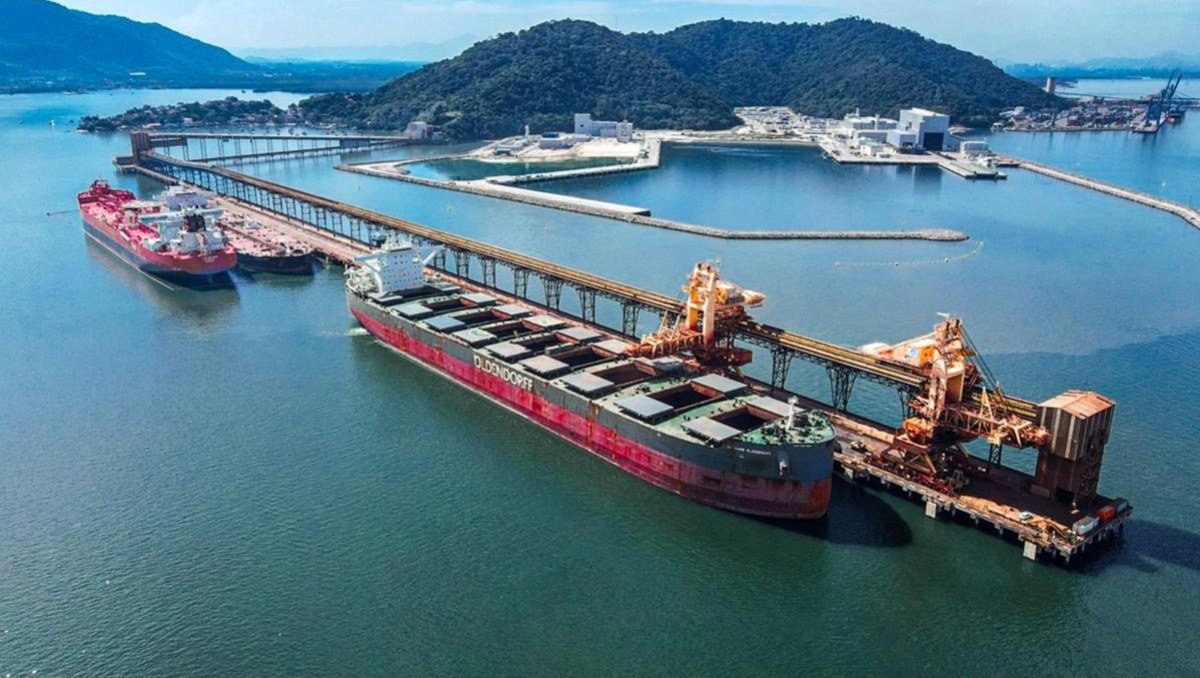
Açu Port, in the north of Rio de Janeiro state, is one of the most emblematic examples of this new model of port control. Prumo Logística, the company that administers the complex, came to be controlled from 2013 onwards by the American fund EIG Global Energy Partners, specialized in energy and infrastructure assets. Another relevant shareholder, present in various strategic operations, is the sovereign wealth fund Mubadala, from the United Arab Emirates.
✅ Click here to follow Jornal Portuário's WhatsApp channel
In 2022, Prumo took another step in this consolidation process by acquiring the 20 percent stake held by German Oiltanking in the Açu Petróleo subsidiary. With the operation, the company came to hold all of the sheltered-water petroleum terminal in the region, reinforcing the logic of asset concentration under the control of major international investors, more interested in long-term returns than in the port's day-to-day operations.
Southeast Port, also known as Southeast Superport, follows similar logic. Originally built by the MMX group of Eike Batista, the enterprise had its control transferred after the group's restructuring. Currently, the port is controlled by a joint venture formed by Trafigura, a multinational in petroleum, metals, and minerals trading, and the sovereign wealth fund Mubadala. The acquisition of control took place between 2013 and 2014, in an operation estimated at around 400 million dollars.


The agreement involved complex financial engineering, which included the purchase of equity stakes, the issuance and swap of securities backed by royalties, known as MMXM11, as well as the transfer of responsibilities related to the debts of the former controlling company. These hybrid instruments, which mix equity participation, variable compensation, and rights over future revenues, are increasingly common in the port sector.
In the case of Southeast Port, investors who held MMXM11 securities had to deal with processes of swapping these papers for equivalent ones after Trafigura and Mubadala entered into control. Situations like this illustrate how decision-making power over port assets can be distant from the visible day-to-day operation, remaining concentrated in financial structures that are opaque to the general public.
Although some ports still have strong presence of families or historic national assets, in many others real control lies in the hands of funds that prefer to operate discreetly. The Moreira Salles family has no equity participation in Prumo, whether through its family office or otherwise. Prumo Logística Global S.A. is controlled by EIG Management Company LLC (93.1%) and also has the sovereign wealth fund from Abu Dhabi, Mubadala Development Company, as a shareholder, with 6.9% participation.
Faced with this scenario, the question that titles this article remains current and necessary. Who really controls the ports is not, necessarily, whoever is on the quay, at the crane, or in the operations room, but whoever structures the capital, defines governance, and establishes long-term strategies. Understanding this dynamic is essential for any serious debate about logistical sovereignty, infrastructure investments, and the future of Brazil's port system.
```